
Automation
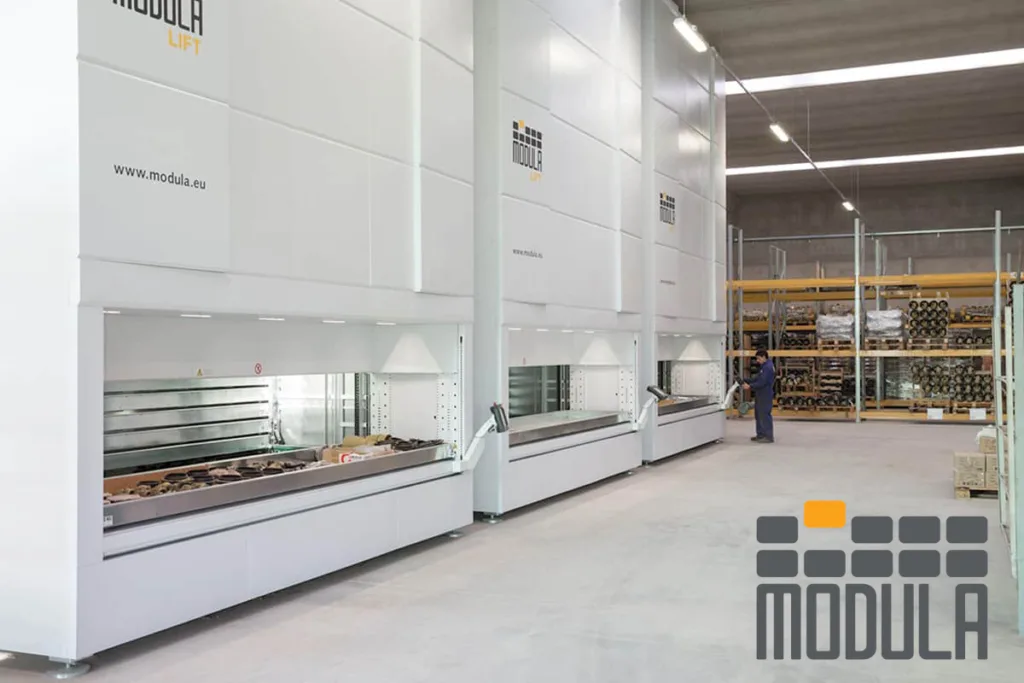
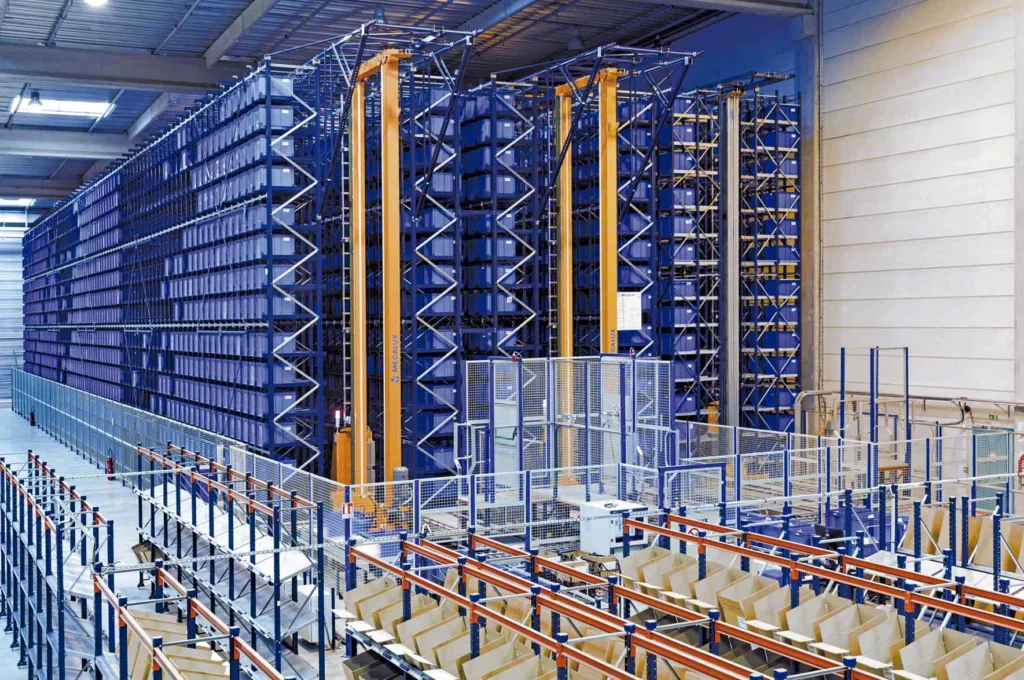
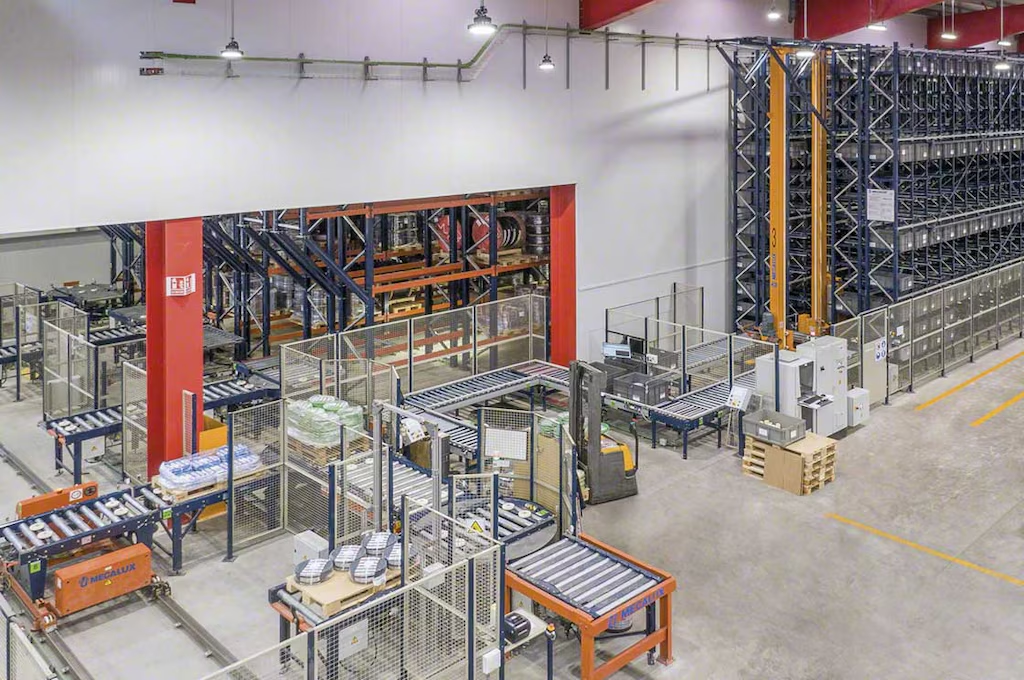
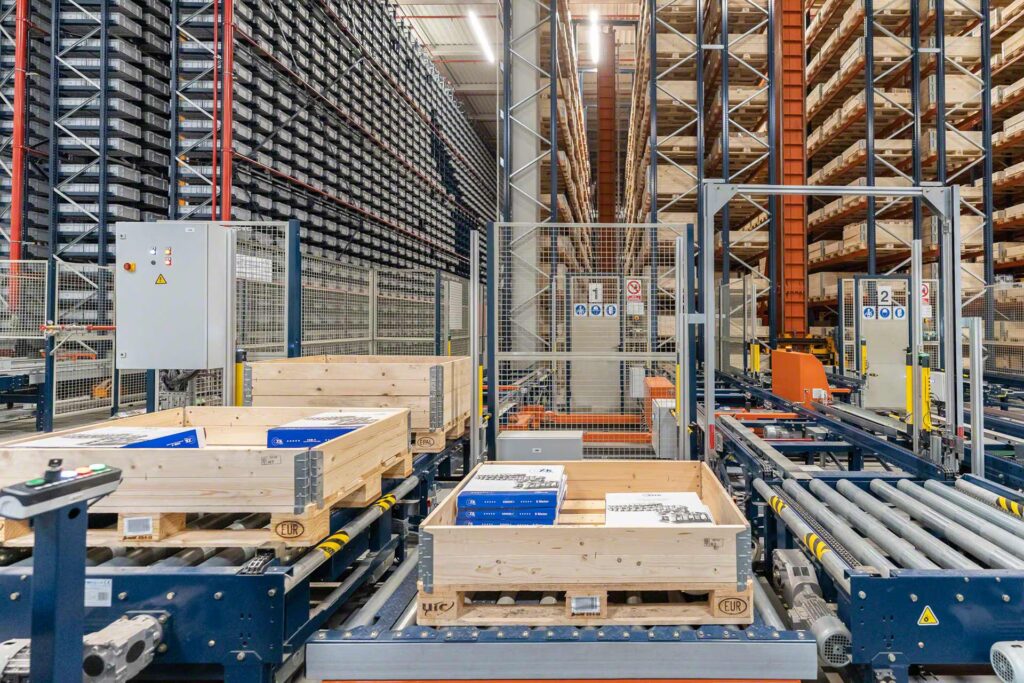
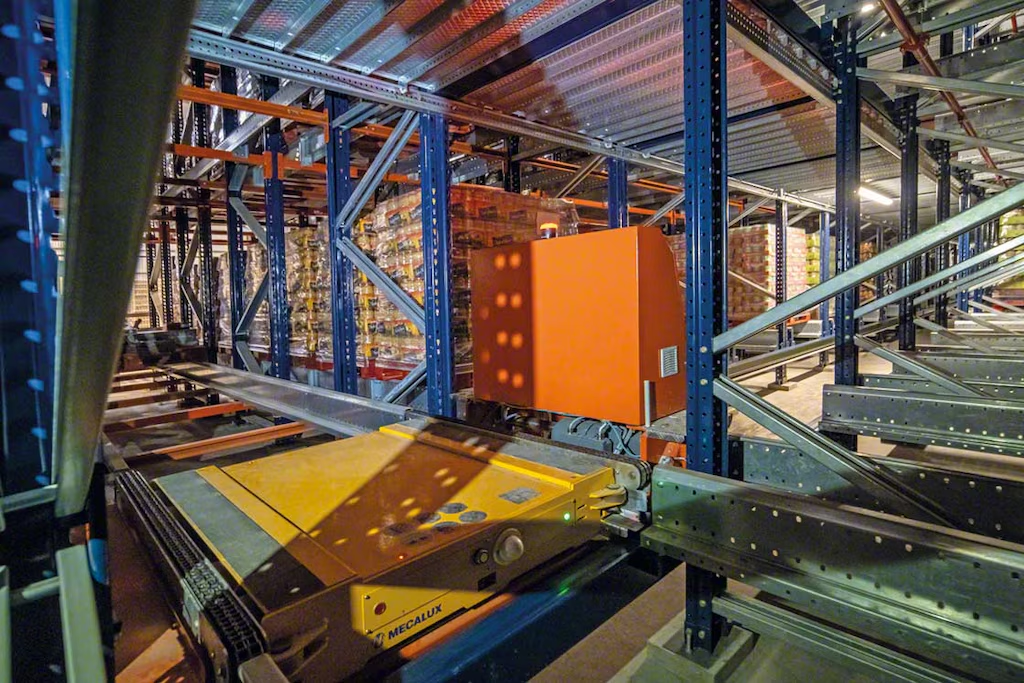
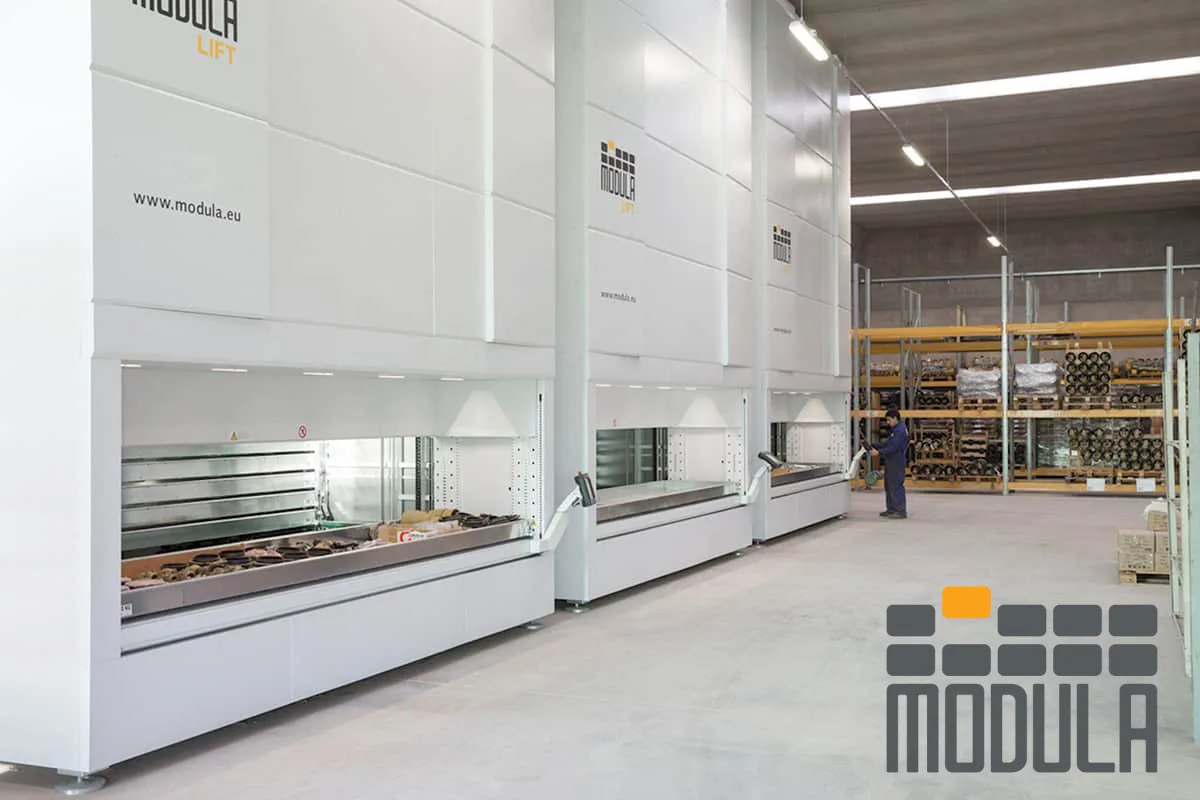

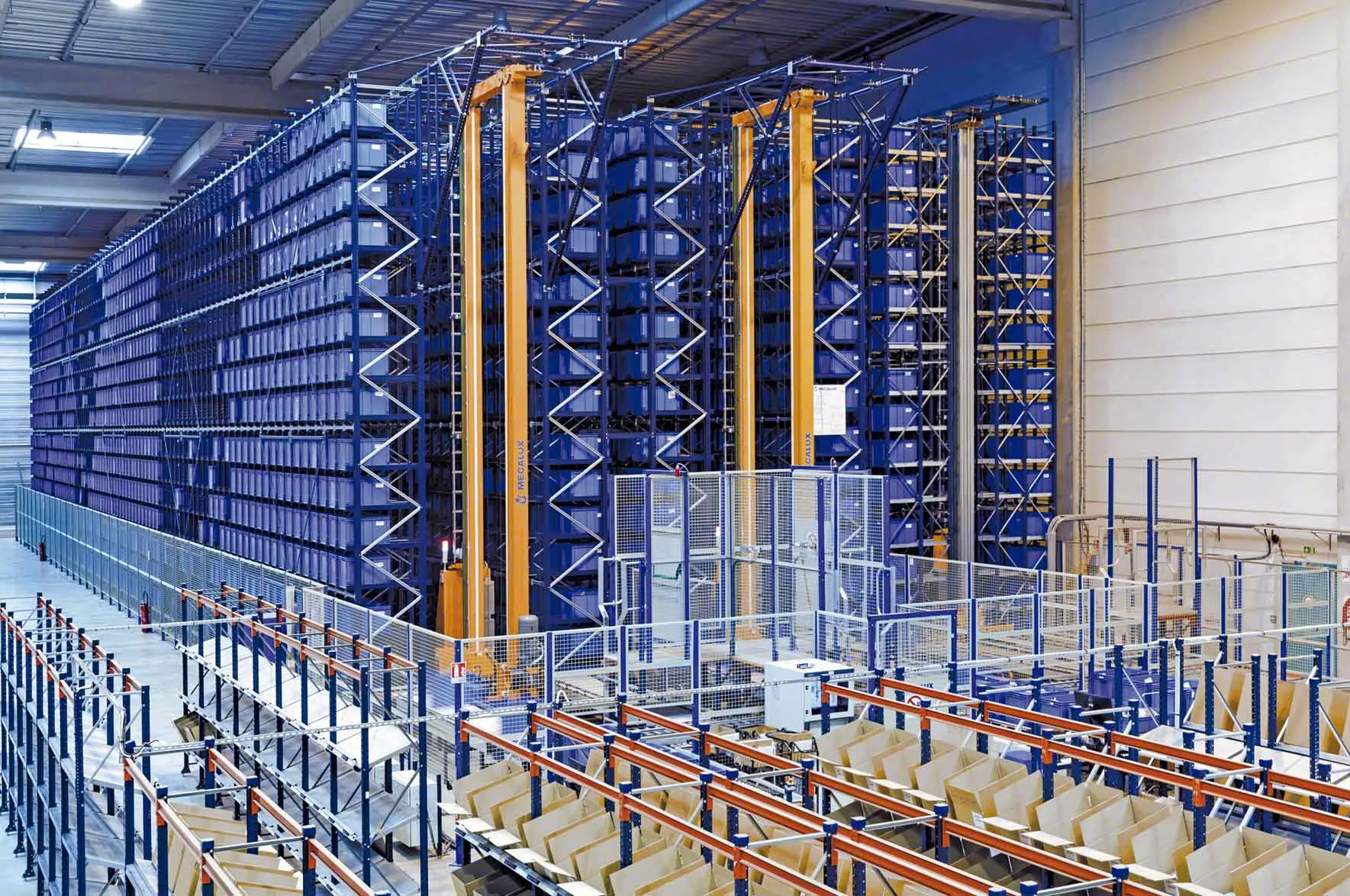
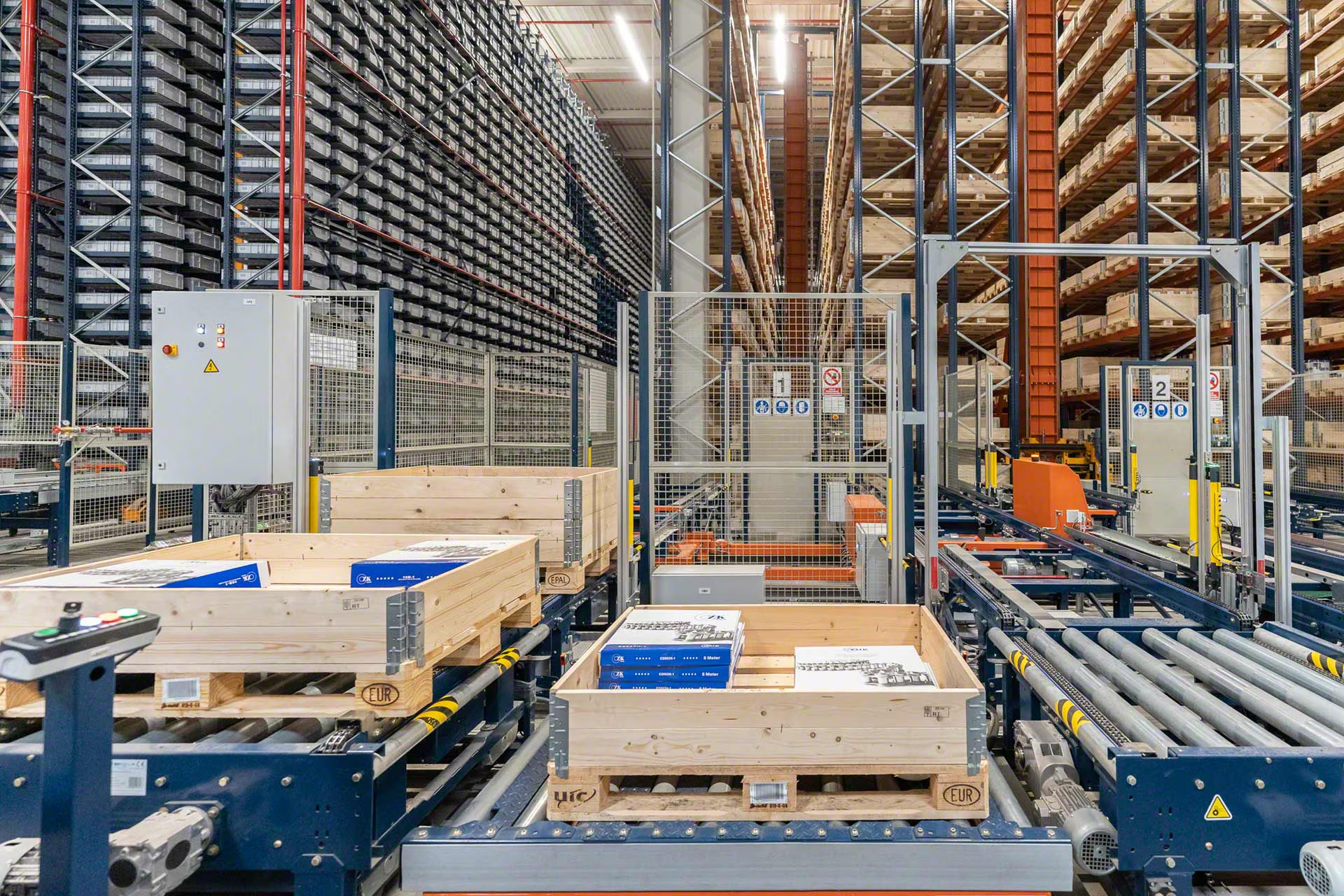
Warehouse automation offers several benefits, including increased efficiency and productivity achieved through continuous operation and faster throughput. It helps reduce costs by lowering labor expenses, minimizes errors, and improves safety by allowing robots to manage hazardous or repetitive tasks. Additionally, automation enhances accuracy, optimizes space utilization, and makes it easier to adapt to fluctuating demand.
ASRS
An Automated Storage and Retrieval System (ASRS) leverages computers, software, and robotics to transform warehouse operations. By maximizing space and boosting efficiency, these innovative systems enhance inventory accuracy. ASRS solutions range from high-density unit-load cranes for large pallets to agile robotic systems for bins and totes, creating a streamlined and intelligent warehousing experience.
- Increased throughput: Faster and more accurate storage and retrieval operations boost overall warehouse productivity.
- Space maximization: High-density storage reduces the warehouse footprint, allowing for more products to be stored in less space.
- Reduced labor costs: Automation takes over repetitive and labor-intensive tasks, lowering labor costs and freeing up employees for more complex work.
- Improved Accuracy: Eliminates human error in storing and retrieving items, leading to better inventory control.
- Enhanced safety: Reduces risks associated with repetitive movements, climbing ladders, and lifting heavy items, improving worker safety.
Pallet Shuffle Systems
- Increased productivity: By automating the storage and retrieval process, shuttles speed up order fulfillment times and increase the number of storage cycles per hour.
- Versatile storage: Pallet shuttles can adapt to different warehouse dimensions and are compatible with both LIFO (Last-In, First-Out) and FIFO (First-In, First-Out) inventory management strategies.
- Scalability: The systems can easily scale to accommodate growing business needs and expanding storage requirements.
- Reduced labor costs: Automating pallet handling reduces the reliance on manual labor and specialized forklift operators, helping to mitigate labor shortages and associated costs.
- Lower operating costs: Better space utilization reduces the footprint and associated building costs, while improved energy efficiency is notable in cold storage environments.
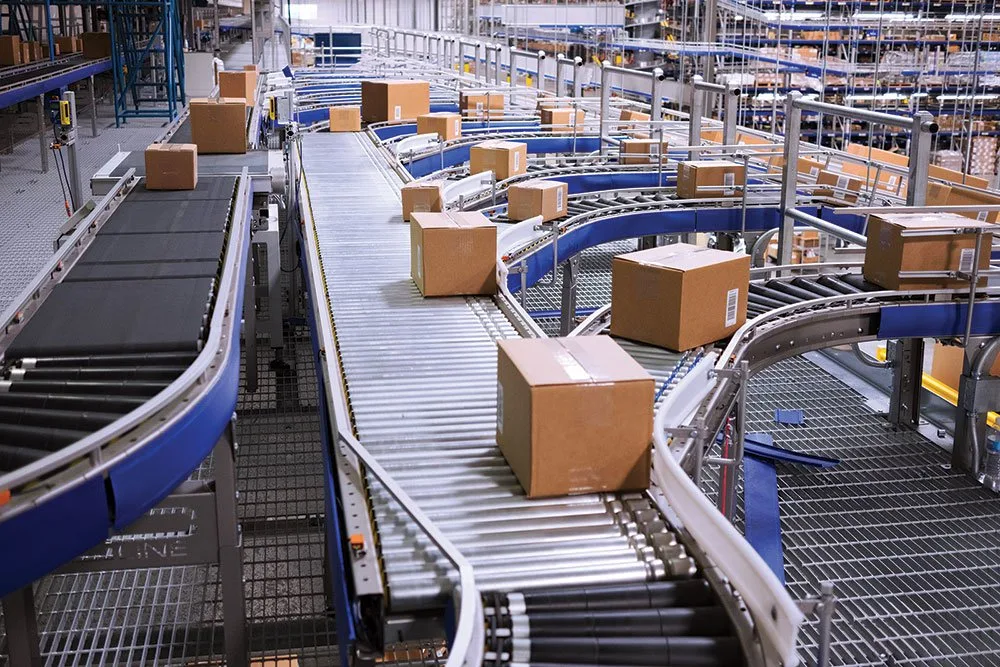
Sortation Systems
- Increased throughput and efficiency: Automated systems process thousands of items per hour, significantly boosting productivity and reducing order cycle times.
- Improved accuracy: By minimizing human error through barcode scanning and other technologies, sortation systems ensure that items reach their correct destinations, leading to fewer mistakes.
- Reduced labor costs: Automating the sorting process decreases the need for manual labor, which can significantly reduce costs, especially for high-volume operations.
- Enhanced safety: Automation reduces the physical strain on warehouse workers, creating a safer working environment.
- Scalability and flexibility: Sortation systems can be scaled or reconfigured to adapt to changing business needs, such as fluctuating order volumes or new product types.
- Better space utilization: These systems efficiently route items, minimizing congestion and maximizing the use of floor space.
Get updates from Summit
Sign up below to get product and promotion updates from us.